Employee benefits communications, all year long
With over two decades of experience, our designers and benefit specialists work hand in hand to create materials that inform and inspire action.
With over two decades of experience, our designers and benefit specialists work hand in hand to create materials that inform and inspire action.





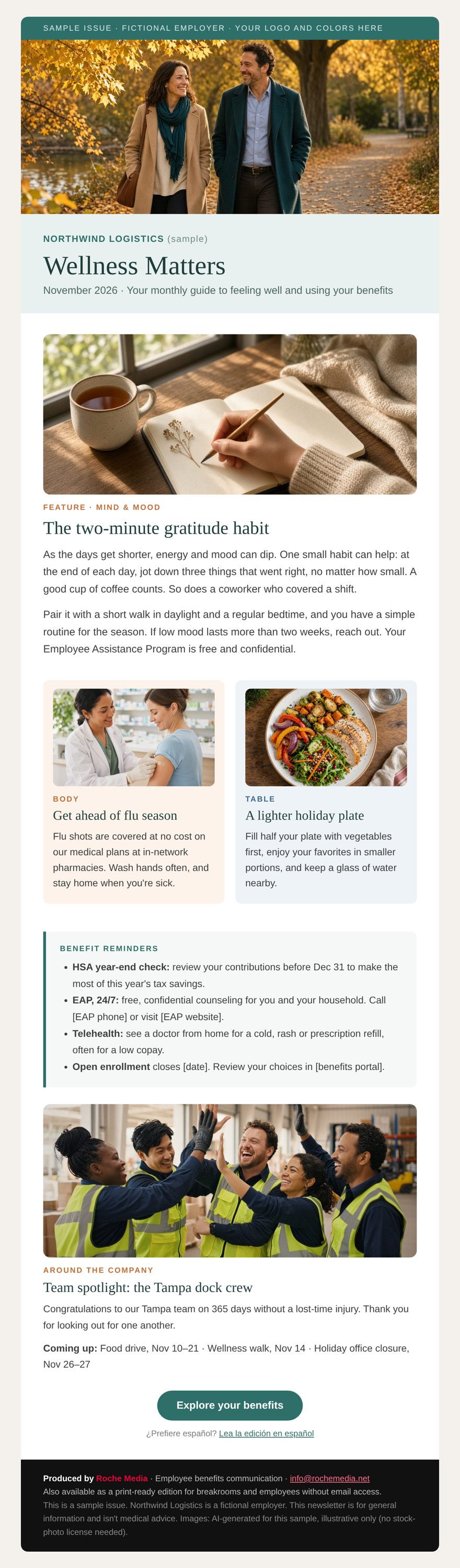
After open enrollment closes, benefits communication at many organizations goes silent until next year. Then employees are surprised by benefits they forgot they had, and HR fields the same questions every fall.
We believe a monthly newsletter is one of the simplest ways to fix that, but only if it earns its place in the inbox. The goal isn't to send more email. It's to send something employees are glad they opened.
Done well, a newsletter also makes open enrollment easier. Employees who have heard from HR all year are more familiar with their benefits, more likely to read enrollment materials and less likely to be surprised.
Consistency matters more than volume. A short monthly issue that arrives reliably is better than an ambitious weekly plan that fades by spring. Decide on a day, a length and a handful of recurring sections, and plan topics a quarter ahead so the newsletter never becomes a scramble.
A simple editorial calendar, even a shared spreadsheet, keeps topics balanced across the year and makes it easy to line up benefit reminders with the seasons when they matter most.
Open each issue with content that helps employees in their actual lives: a practical wellness article, a seasonal tip, a reminder about a benefit that fits the month. A note about the employee assistance program lands differently in a stressful season than buried in an enrollment guide. Benefits information feels relevant when it shows up at the moment it is needed.
Write in a warm, human voice. Employees can tell the difference between a newsletter written for them and one written to satisfy a checklist.
A newsletter that is only about benefits starts to feel like a notice. Blend benefit reminders with company news, recognition and short wellness pieces, so the newsletter reflects the organization rather than just the benefits department. That mix is what keeps people reading.
Short employee stories, shared with permission, are another way to make an issue feel personal. A colleague explaining how they used a benefit can be more persuasive than any reminder written by HR, as long as it is real and the employee is comfortable being featured.
Every issue should include at least one clear action: register for a webinar, schedule a preventive visit, check your beneficiary designation, visit the benefits site. Link everything, keep the layout clean on a phone and make sure it is in your branding so employees recognize it instantly.
Keep each issue short enough to read in a few minutes. If a topic needs more space, give it a short summary in the newsletter and a full page on your benefits site.
Not every employee reads work email. A print-ready version for breakrooms, a Spanish edition where it helps, and a link from your benefits microsite all extend the newsletter's reach to the people who are often the hardest to reach.
A good newsletter turns benefits from an annual event into an ongoing resource. It doesn't need to be long or elaborate. It needs to be useful, consistent and easy to act on.
Pay attention to what employees open, click and ask about. Over time, those signals show which topics resonate and which fall flat. Ask for feedback occasionally with a one-question survey or an open invitation to suggest topics. Adjust the mix based on what you learn, and don't be afraid to retire a section that isn't working.
The best newsletters evolve with their readers, and employees notice when their input shapes what they receive.
If you'd like help planning or producing one, we'd be glad to talk.
Tell us about your employees and your timeline, and we’ll share ideas and samples. Use our contact form or email info@rochemedia.net.
Request a sample
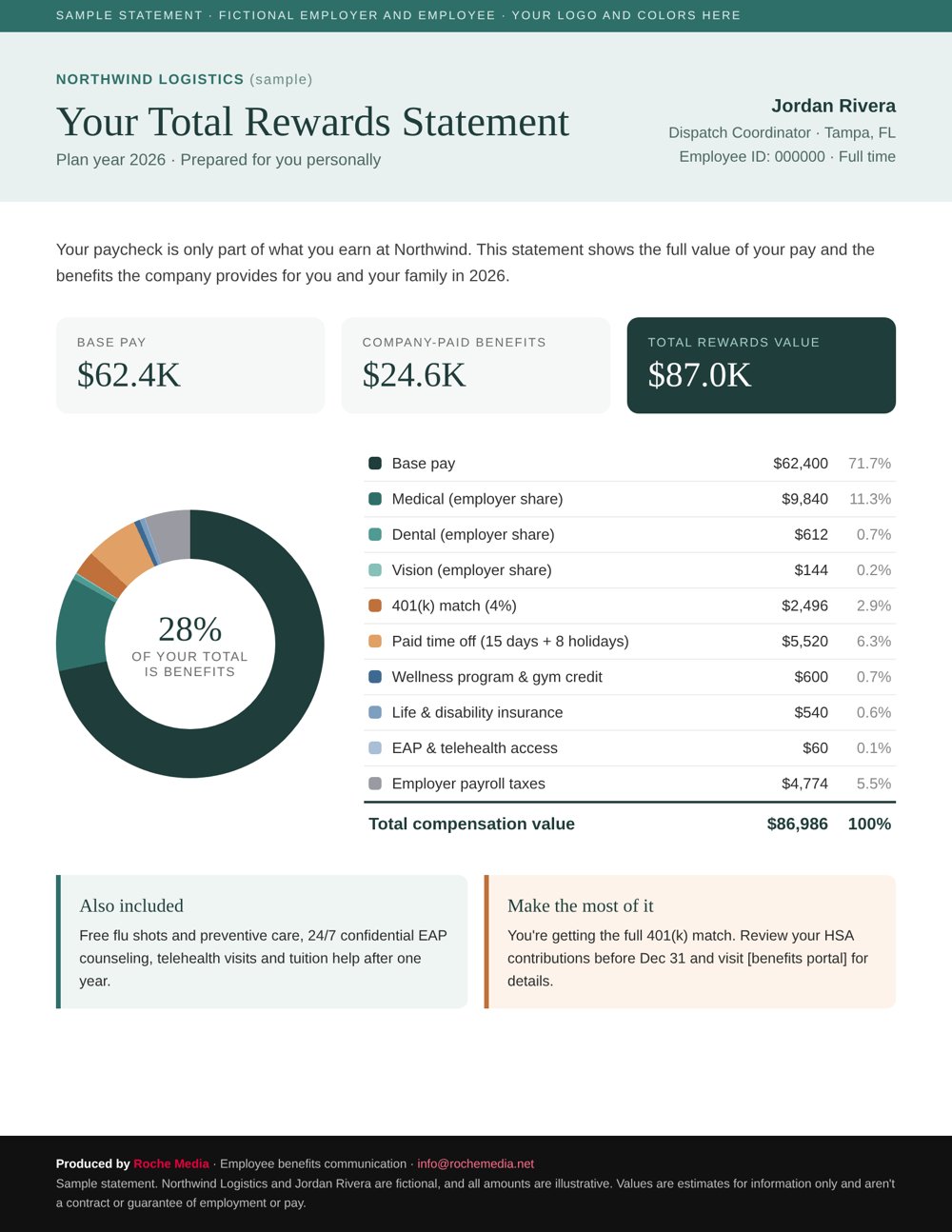
Most employees underestimate what their employer invests in them. A clear Total Rewards Statement changes the conversation.
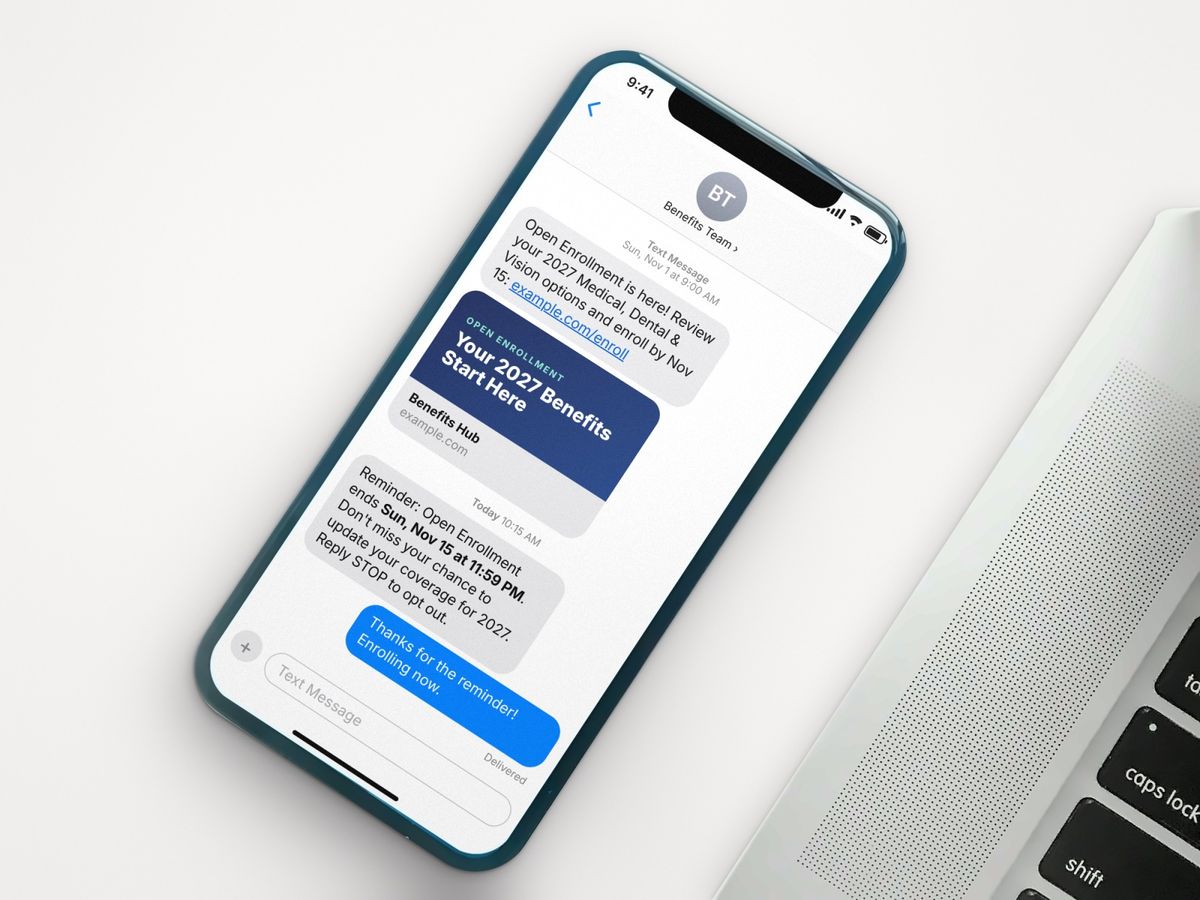
One announcement email isn't a campaign. A planned sequence of email and text reminders gets employees to act before the window closes.