Employee benefits communications, all year long
With over two decades of experience, our designers and benefit specialists work hand in hand to create materials that inform and inspire action.
With over two decades of experience, our designers and benefit specialists work hand in hand to create materials that inform and inspire action.




AI chatbots are showing up everywhere, and benefits is a natural fit: employees have lots of repetitive questions, often at inconvenient hours, and the answers usually already exist in the benefits guide.
But a benefits chatbot that guesses is worse than no chatbot at all. If it confidently gives the wrong deductible or suggests a plan covers something it doesn't, the cost lands on the employee and the trust lands on HR. Our position is that the value of a benefits chatbot comes from its boundaries.
None of this is a reason to avoid the technology. It is a reason to design it carefully, with the same attention to accuracy you would expect from a printed benefits guide.
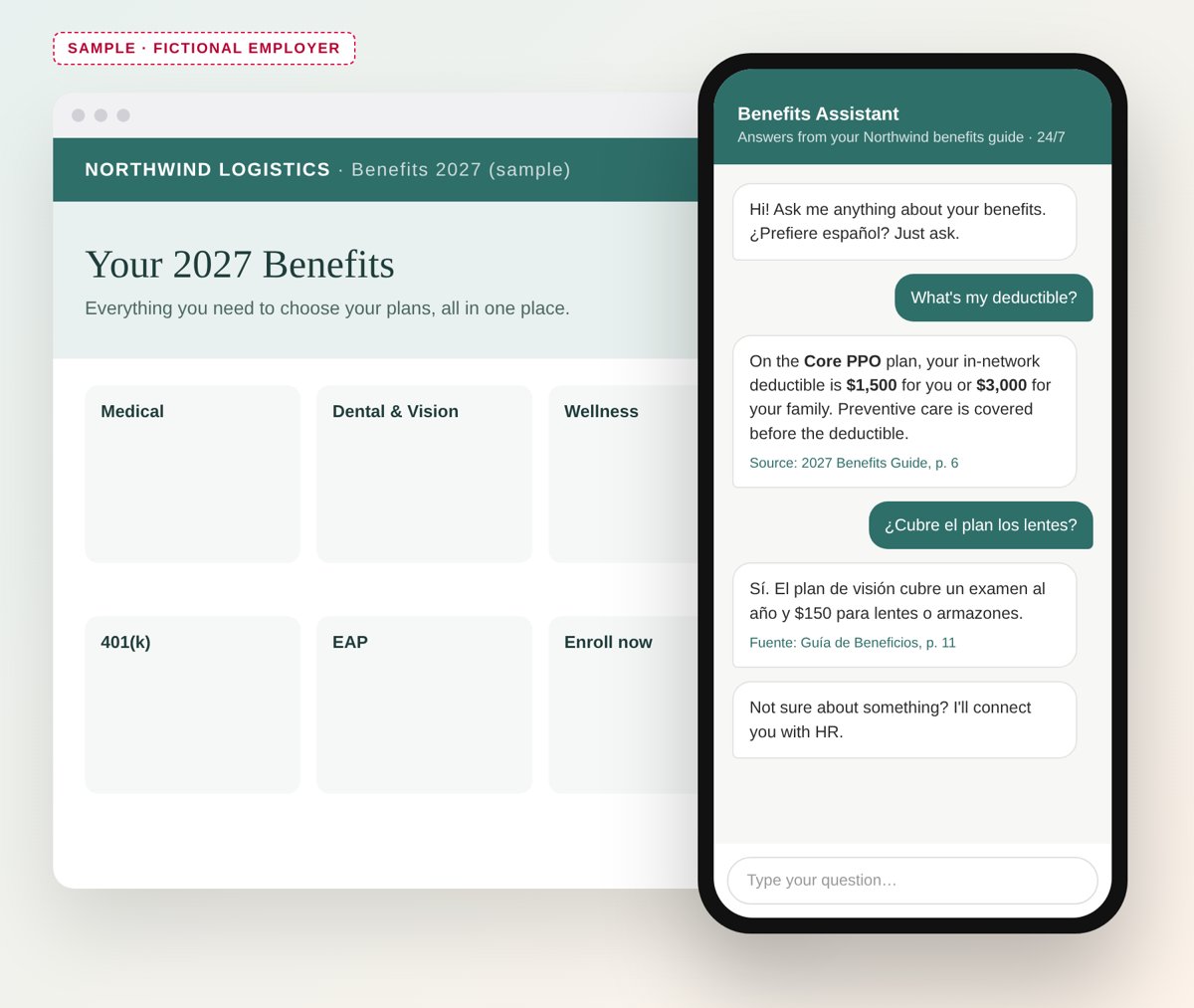
A benefits chatbot should be grounded in your benefits guide and plan documents, not in general internet knowledge. When an employee asks what their deductible is, the right answer is the one in your plan, not an average or an example. Restricting the chatbot to your own content is the single most important design decision.
That also means keeping the content current. When plans or contacts change, the chatbot's source material has to change with them, or it will keep giving last year's answers.
Every answer should point to its source, such as the page or section of the guide it used. That lets employees verify the answer, gives HR an easy way to spot gaps, and builds the kind of confidence that keeps people using the tool. If the chatbot can't cite a source, it probably shouldn't be answering.
Citations also make the chatbot easier to maintain: when an answer looks off, HR can see exactly which passage it relied on and fix the source rather than guessing at what went wrong.
Some questions shouldn't be answered by software at all: anything involving an employee's personal medical situation, a claim dispute, a leave or accommodation request, or a question about eligibility that depends on individual facts. In those cases a good chatbot says so plainly and tells the employee exactly how to reach HR or the right carrier.
The same goes for uncertainty. "I'm not sure, here's who can help" is a perfectly good answer.
Being explicit about these limits up front, in a short note at the top of the chat, sets expectations and protects employees' privacy.
A chatbot is most useful when it lives where employees already go for benefits information, such as your benefits microsite, and works well on a phone. Offering answers in more than one language, including Spanish where your workforce needs it, can make a real difference for employees who would otherwise not ask at all.
Review the questions employees ask. They are a free, honest map of where your communications are unclear. If many people ask the same thing, the fix might be a better paragraph in next year's guide, not a smarter chatbot.
It is also worth deciding in advance who owns the chatbot after launch, how often its answers are reviewed and how employees can flag an answer that looks wrong.
Used well, an AI benefits chatbot takes routine questions off HR's plate and gives employees answers when they need them. Used carelessly, it creates new problems. The difference is in the limits you set at the start.
Employees should always know they are talking to an automated tool, what it is trained on and what it won't do. Explain how questions are handled and whether they are stored. A short, plain-language note does more for adoption than any feature. People are more comfortable using a tool when they understand it, and far less likely to rely on it for something it was never meant to handle.
If you're considering a chatbot for your benefits site, we're happy to walk through how we approach it.
Tell us about your employees and your timeline, and we’ll share ideas and samples. Use our contact form or email info@rochemedia.net.
Request a sample
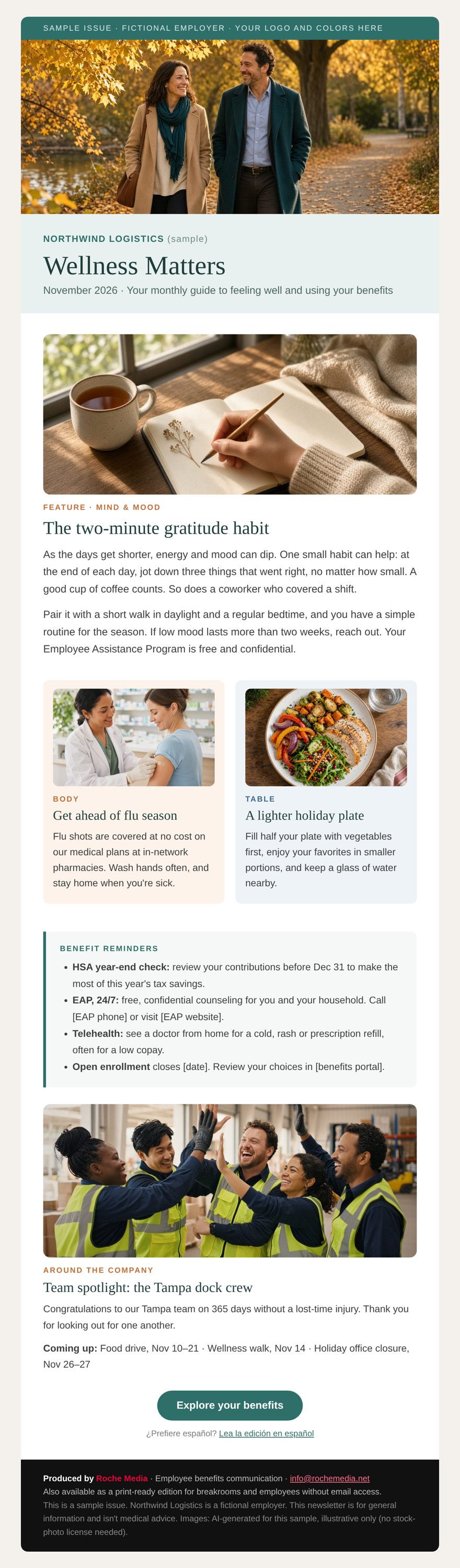
Benefits communication shouldn't go quiet after enrollment. A simple monthly rhythm keeps benefits useful, not just visible.
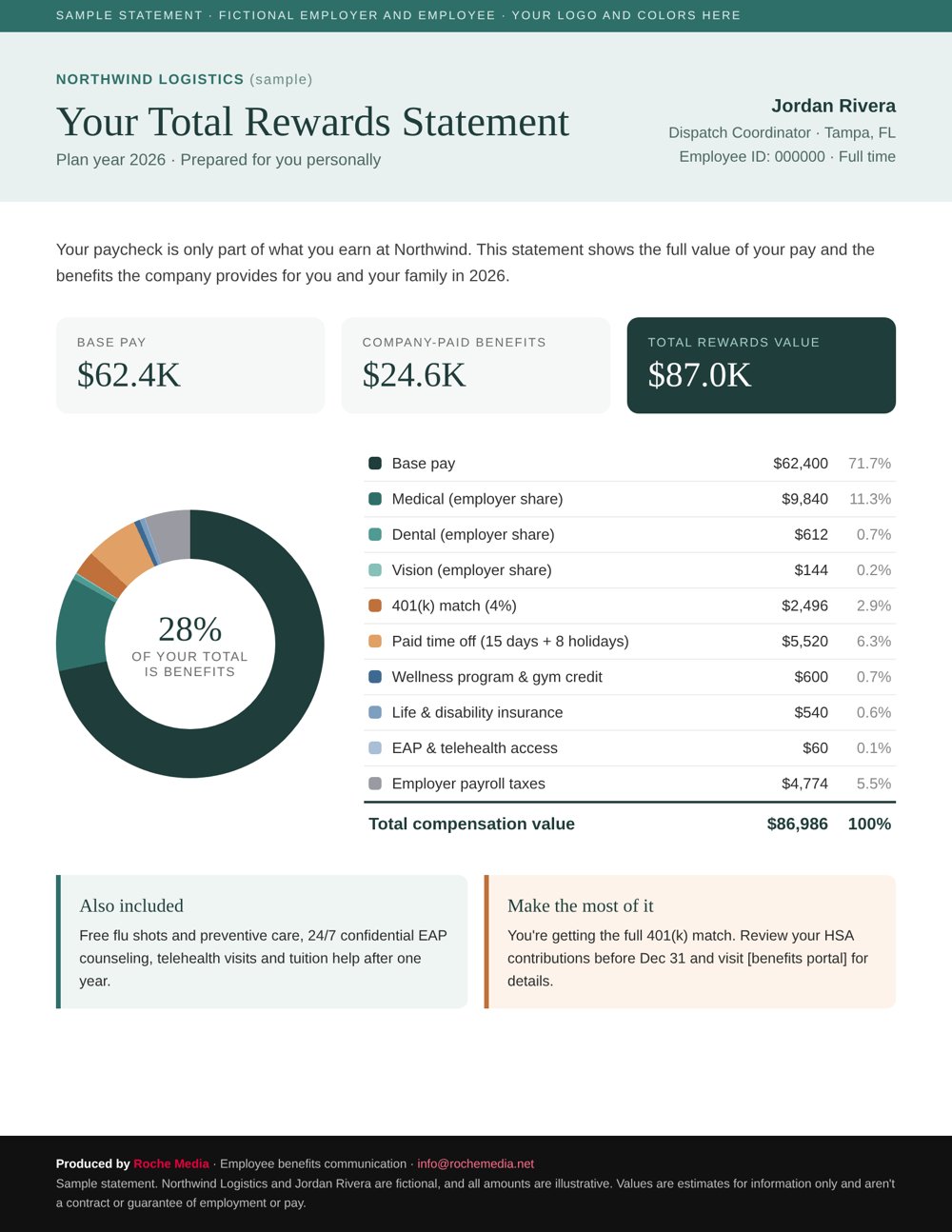
Most employees underestimate what their employer invests in them. A clear Total Rewards Statement changes the conversation.